The genetics behind our preferences for Valentine's Day's most iconic gifts
7th February 2026
Why do we give flowers for Valentine's Day? Or perfume? Why do we listen to certain music? The answer could be written in your DNA. Let's take a closer look at how your genes could be influencing how much you like popular Valentine's Day gifts.
You know the drill. February rolls around bringing Valentine’s day with it, and suddenly we’re all supposed to agree that flowers, wine, chocolate, and a candlelit evening are universally romantic.
But… are they?

If you’ve ever wondered why you love the smell of roses while your partner thinks they smell like an old hotel lobby, or why a box of chocolates feels like pure joy to one person and a mild disappointment to another, there’s a good chance that genetics is one of the factors influencing those preferences.
So let’s have a chat about how your DNA might quietly influence how much you enjoy those classic Valentine’s gifts.
Flowers: romantic gesture of sneezing hazard?
Hearts and flowers are the unofficial mascot of Valentines day, but human reactions to them can vary, sometimes wildly.
When you smell a bunch of flowers, what your nose is actually detecting are volatile chemical compounds drifting through the air and binding to your olfactory receptors. These receptors are influenced by a large family of genes, your olfactory receptor genes (sometimes abbreviated to just OR genes). Just a small genetic difference can change how strong a floral scent will seem to you, and even how pleasant the scent is to you.
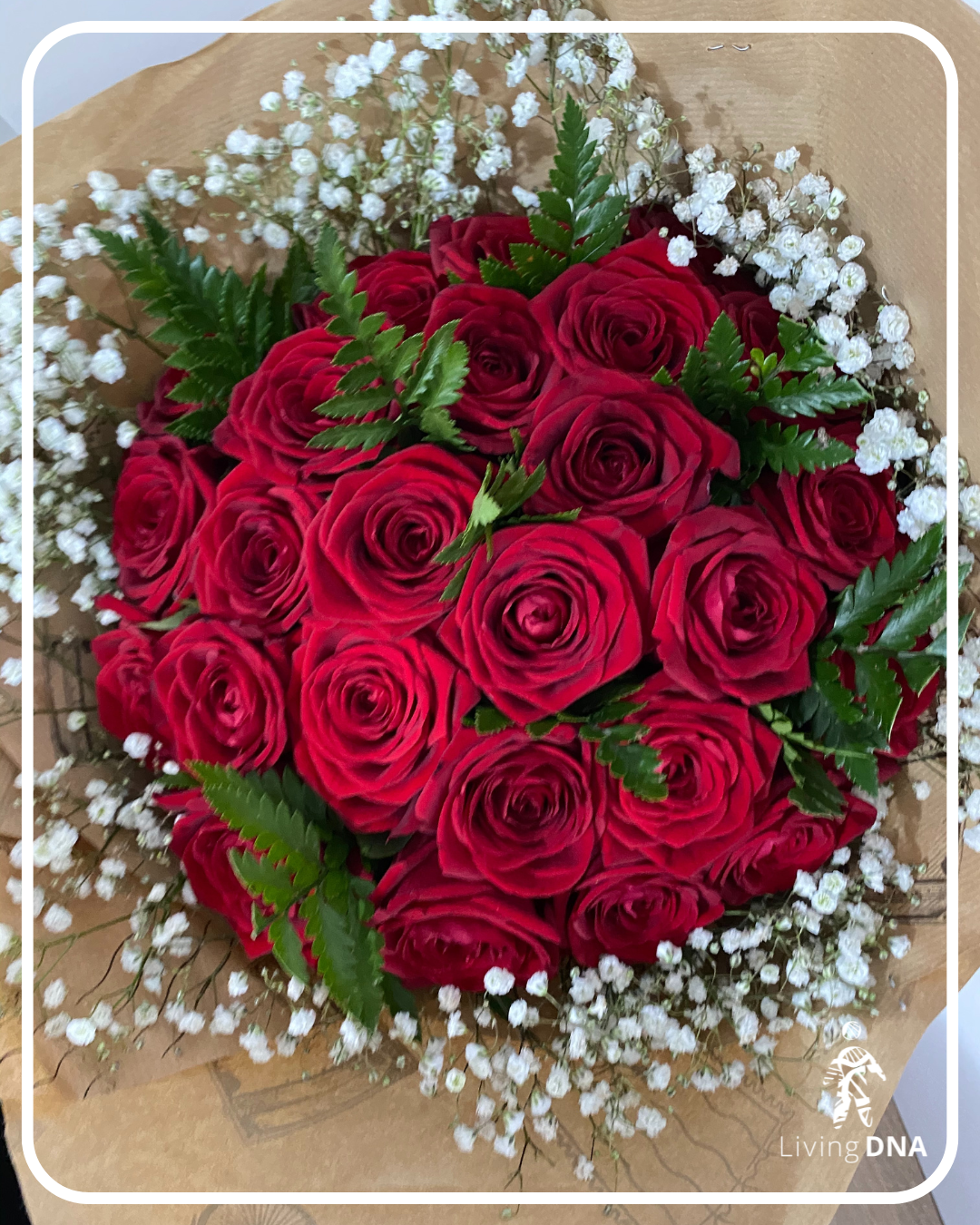
One well-studied example of an OR gene is OR5A1, which affects sensitivity to a compound called beta-ionine, a compound often found in flowers. Some people have a version of this gene that make beta-ionine smell rich and floral, while others can barely register the scent or even find it oddly musty.
If roses smell intoxicating to you but underwhelming to your partner, it’s not your imagination, it’s receptor biology.
Then there’s hay fever. Variants in immune-related genes, including those in the HLA region and genes like IL3, influence how likely your immune system is to overreact to pollen. For those people - including your friendly neighbourhood Living DNA blog writer - flowers aren’t romantic, they’re inflammatory.
Chocolate: why one square is bliss (and another is… just fine)
Taste is far more genetic than we usually realise.
Genes in the TAS2R family control bitter taste perception. Variations in these genes can make bitter compounds taste extremely strong to some people and barely noticeable to others. This is why dark chocolate tastes luxuriously complex to some and aggressively bitter to others.

There’s also a metabolic angle. Variants near the FGF21 gene have been linked to differences in sweet preference. Some versions are associated with a stronger preference for sugary foods, which means that chocolate genuinely delivers higher rewards to some people's brains.
So yes, if someone says “I could take or leave chocolate,” they may literally be wired that way by their DNA.
Wine and champagne: romance in a glass or instant regret?
Alcohol enjoyment is one of the clearest examples of genetics in action.

Genes like ADH1B and ALDH2 control how your body breaks down alcohol. Certain variants slow this process, causing acetaldehyde (a toxic byproduct) to build up. This can lead to flushing, nausea, headaches, and feeling generally awful after small amounts of alcohol.
People with these variants often drink less not because they have strong willpower and aren’t caving to peer pressure, but because their body is sending a very firm no thank you signal.
Perfume and candles: a love story or a headache?
Just like with flowers, olfactory receptor variation plays a huge role in how we experience perfumes and scented candles. Some receptors are particularly sensitive to musky or synthetic fragrance compounds. Variants in genes like OR7D4, for example, influence how people perceive androstenone, a compound found in some perfumes and in natural body scent. Depending on your version of this gene, the same scent can smell warm and attractive, or harsh and unpleasant.
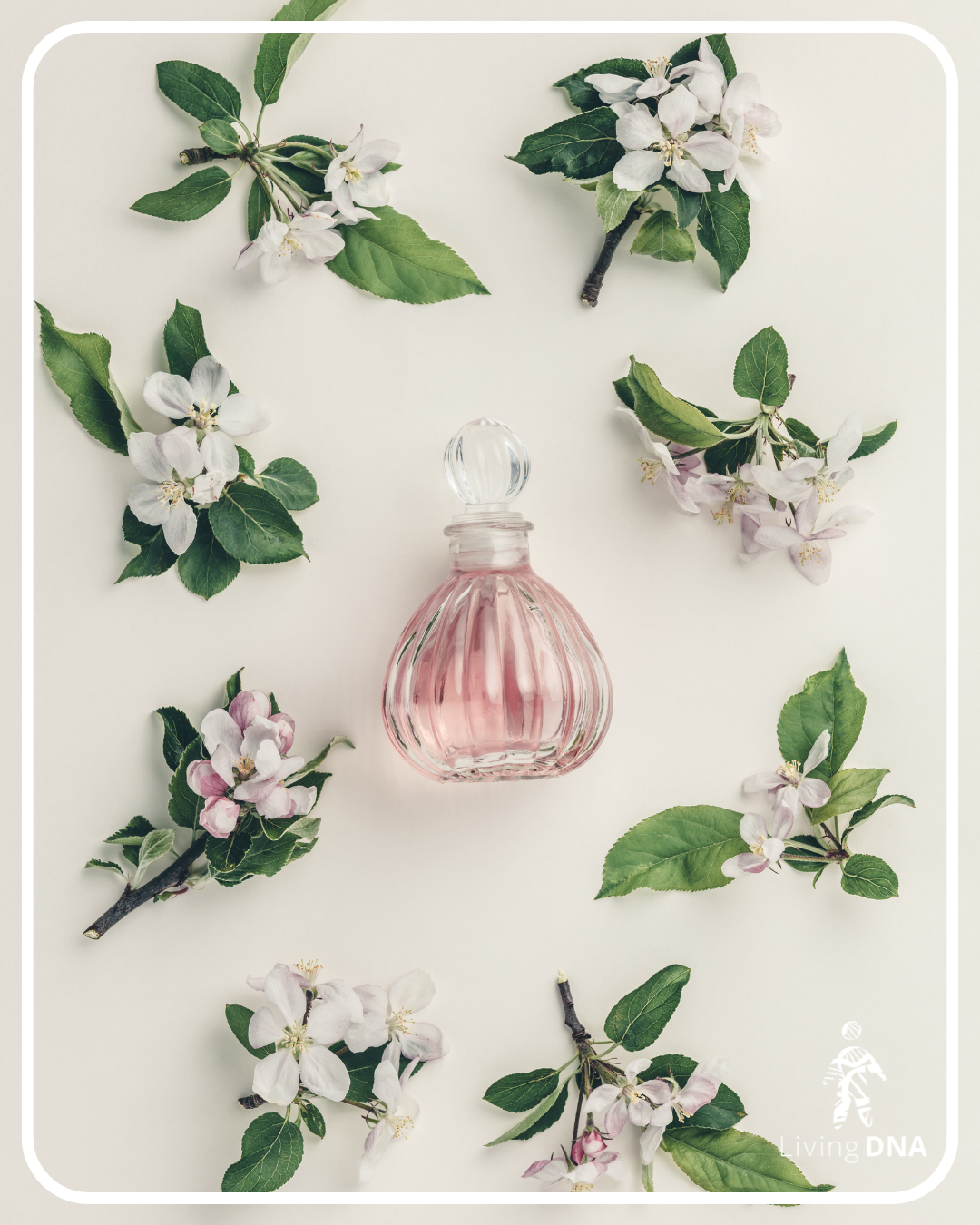
This is why perfume is such a risky gift, particularly if you don’t already know your valentine’s preferences. You’re not just finding something that smells nice to you, you’re guessing their receptors.
Touch and affection
Touch perception can be highly emotional, but it’s also a mechanical sensation.
Genes like PIEZ02 help to convert physical touch into nerve signals that are then interpreted by your brain. Variations to this gene affect how sensitive a person may be to light touch and pressure. Some people experience even gentle touch very intensely, while others need a firmer contact to register the same sensation.

Then there’s bonding. Variants in the OXTR gene influence how strongly people respond to oxytocin, a hormone that’s involved in trust, bonding, and emotional closeness. It’s what give you that warm fuzzy feeling during a cuddle, or when you gaze into a partner’s eyes.
Some people feel a strong emotional reward from physical closeness and romantic gestures, while others express their connection and affection more through shared activities and practical care. This doesn’t mean that the underlying feelings are different, it’s the same affection with different wiring.
Music, ambience, and setting “the vibe”
There’s nothing quite so personal and varied as musical taste. Music can make one person emotional, and another mildly entertained.
Some of this is down to genes involved in dopamine signalling and reward, such as COMT and AVPR1A, which influence how strongly we respond to music and emotionally charged experiences. Certain variants are associated with heightened emotional responses to music, including those goosebump moments.

When your carefully curated romantic playlist doesn’t quite hit the mark for your valentine, it’s not a lack of sentiment, it’s just a difference in your reward processing.
The takeaway
No genes can influence who you love, but they do influence key factors in how you experience smell, taste, touch, sound, and emotional reward, all the things that the modern Valentine’s Day is built around.

So what is the takeaway? Well, there’s no such thing as a universally perfect romantic gesture, your preferences aren’t superficial, and neither are your partner’s, and “it’s the thought that counts” works best when the thought is personal.
Romance hits hardest when it aligns with how someone’s body and brain experience the world, and your DNA is one small, but fascinating, part of that story.
What now?
Is your interest in DNA piqued? Uploading to Living DNA, or taking a test directly with us, opens the opportunity to view genetic health traits, including traits linked to allergies such as hay fever, and nutrigenomics traits such as Taste Perception.

Click here to order your Living DNA test in our Valentine’s Day sale today.