Are you summer loving or do you get the summertime blues? The role your DNA plays in your seasonal preference
4th June 2026
Do you love the heat of summer, or do you yearn for the cooler months? Did you know that the answer might be rooted in your DNA?
We’ve had record breaking temperatures in the UK this May, with a sweltering 35° recorded in some places. As a famously chilly island, this has been a bit of a shock to the system!
We know that our DNA is the blueprint for building us, your own DNA carries the instructions for creating the living breathing person reading these words, and we can also tell a lot about how well you handle the different environmental factors presented by the changing seasons by looking closely at the minute differences between your DNA and another person’s.
Let’s take a closer look at some of the reasons you might prefer the long days of summer, or the long nights of winter.
Itchy eyes and noses abound
Allergies often run in families, and hay fever is no exception. If one or both of your parents suffer from allergic conditions then your own risk increases significantly, but it’s not as simple as inheriting a single “hay fever gene.”
Allergic rhinitis is polygenic, which means that multiple genes contribute to your likelihood of developing symptoms. These genes influence how your immune system recognises and responds to potential allergens.
A key player is the HLA (Human Leucocyte Antigen) gene group. These genes help your immune system to distinguish between what is harmful and what isn’t. In some people, specific HLA variants are linked to an increased sensitivity to allergens, including a well documented association with olive pollen allergy, common in Mediterranean climates.
This exaggerated immune response is your body’s way of being a little bit over cautious, but it often causes more harm than good.
Morningness vs. Eveningness: Do you thrive in the longer daylight hours?
Sleep isn’t the same for everyone. Some people might rise with the sun and spring out of bed with a smile and a song, while others only begin to hit their stride when night begins to fall. Have you ever wondered why this might be?

One part of the answer lies in your genes. Variants on genes known as “clock genes” such as PER1, PER2 and CLOCK help your body to set the pace of your circadian rhythm, the internal clock each of our bodies runs on. Depending on which version of these genes you carry, you may be more inclined towards waking at the crack of dawn… or going to bed at it instead. This tendency towards “morningness” or “eveningness” is called your Chronotype.
Genes can also influence how long you may need to rest each night. While some people are wired to feel refreshed after just a few hours (such as Margaret Thatcher, who famously stated that she only needed four hours per night), others truly need their eight hours, or even more, to feel restored.
Researchers have linked variations in the ABCC9 gene with differences in how much sleep someone needs, which helps to explain why your “eight hours” doesn’t always look the same as someone else’s.
If the changes in daylight hours are interrupting your sleep, your DNA might hold the reason.
Your sunburns or freckles may come from your Neanderthal ancestors
Whether you tan or burn, develop freckles in the sun, and even your skin pigmentation are all influenced by your genes, and some of them are very, very old.
Genetic studies on both modern human populations and archaic humans (extinct human species like Neanderthals and Denisovans), show not only that early modern humans interbred with our ancient cousins, but that many people alive today still carry a small percentage of their DNA.
Scientists believe that some of these variants have survived because they gave our ancestors advantages as they adapted to new climates outside of Africa, in a process called ‘adaptive introgression’.
There are 6 genes that we know are associated with both skin pigmentation and how your skin reacts to sun exposure. These are HYAL2, OCA2, BNC2, POU2F3, HYAL3 & RUNX2, and there is evidence that some variants of them entered the modern human genome from Neanderthal populations.
This means that your sunburns* could be the fault of your Neanderthal ancestors.
There are 2 more genes associated with freckles - BNC2 and MC1R - which have been passed from Neanderthals down through the generations and into the modern population.
Summer or Winter: Which do you prefer?
Whether you spend your summers huddled under a parasol with antihistamines in your pocket and dreaming of the cooler months ahead, or relaxing on the beach, your DNA may lie at the core of your preference.
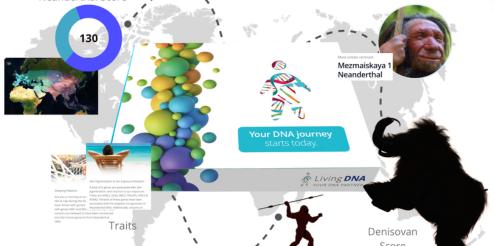
All of the traits we’ve talked about here are included in the Living DNA Genetic Health or Neanderthal upgrades. You can access these through the store in your portal - why not take a look today, and find out more about what your genes can predict?
*Please remember to wear sunscreen. Effective daily use of sunscreen can prevent not only sunburn, but ageing, skin damage, and cancers in people of all skin tones. It is the easiest and most effective way to protect your skin.