Celebrating DNA Day 2026: The Race to Decode Life
23rd April 2026
How the shape of DNA was discovered in 1953
The double helix has become so linked with DNA that it’s almost impossible to see the shape without immediately thinking of the building blocks of life itself. It appears everywhere, in textbooks and in sculptures, and even in our own Living DNA logo, an elegant twisted ladder. Yet until the early 1950s, no one actually knew what DNA looked like. Scientists understood that Deoxyribonucleic acid carried hereditary information, but how it physically stored and transmitted that information remained a total mystery.
At the heart of the problem was that double helix structure. In biology, the shape of a thing is rarely accidental; function underpins everything. If DNA truly encoded the “instructions” for life, then its molecular structure, the architecture that held its shape, had to explain how those instructions were stored, copied, and passed on.
Establishing DNA as the Material of Life
Before structure could be solved, scientists first had to be convinced that DNA, and not protein, was the genetic material that passed instructions on from generation to generation. Key experiments in the 1940s, the Avery–MacLeod–McCarty experiment showed that a “transforming principle” from heat-killed bacteria could transfer genetic traits to living bacteria. By systematically eliminating proteins, RNA, and other components, Oswald Avery and his colleagues demonstrated that only DNA could be responsible for this transformation, identifying it as the molecule of heredity.
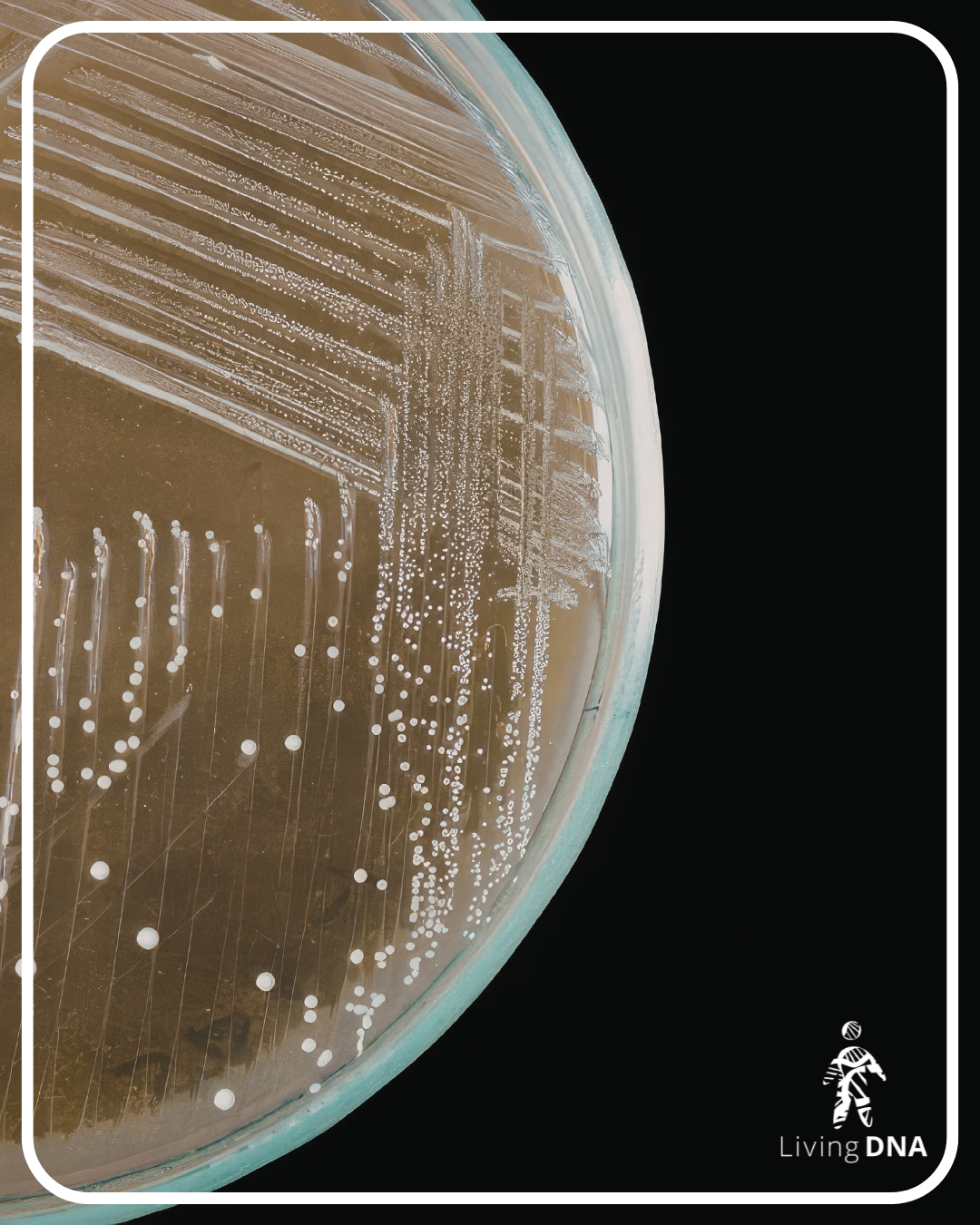
Later the Hershey–Chase experiment, used viruses that infect bacteria to test whether DNA or protein carried genetic instructions. Alfred Hershey and Martha Chase found that only DNA entered the bacteria and controlled what happened next, showing that DNA, and not protein, is the material of heredity.
By the early 1950s, the focus had shifted: if DNA was the blueprint of life, what did that blueprint actually look like?
Multiple research groups across Europe and the United States began working on the problem, each bringing different techniques and assumptions. Among the most important were teams at King's College London and the University of Cambridge.
Two Approaches, One Problem
At King’s College London, Rosalind Franklin and Maurice Wilkins were using X-ray crystallography, a technique that involves firing X-rays through crystallized molecules and interpreting the resulting diffraction patterns. This method does not produce images in way you’d think of a camera or even an x-ray of your bones; instead, it gives images of patterns that must then be mathematically analyzed to infer a three-dimensional structure. It’s difficult and data-driven work that needs both technical skill and interpretive discipline.
At Cambridge, James Watson and Francis Crick were using a different strategy. Rather than generating new experimental data, they focused on model-building - constructing physical and conceptual models of DNA that could be tested against information that was already known. Their approach relied heavily on using results from other researchers to develop a coherent structural hypothesis.
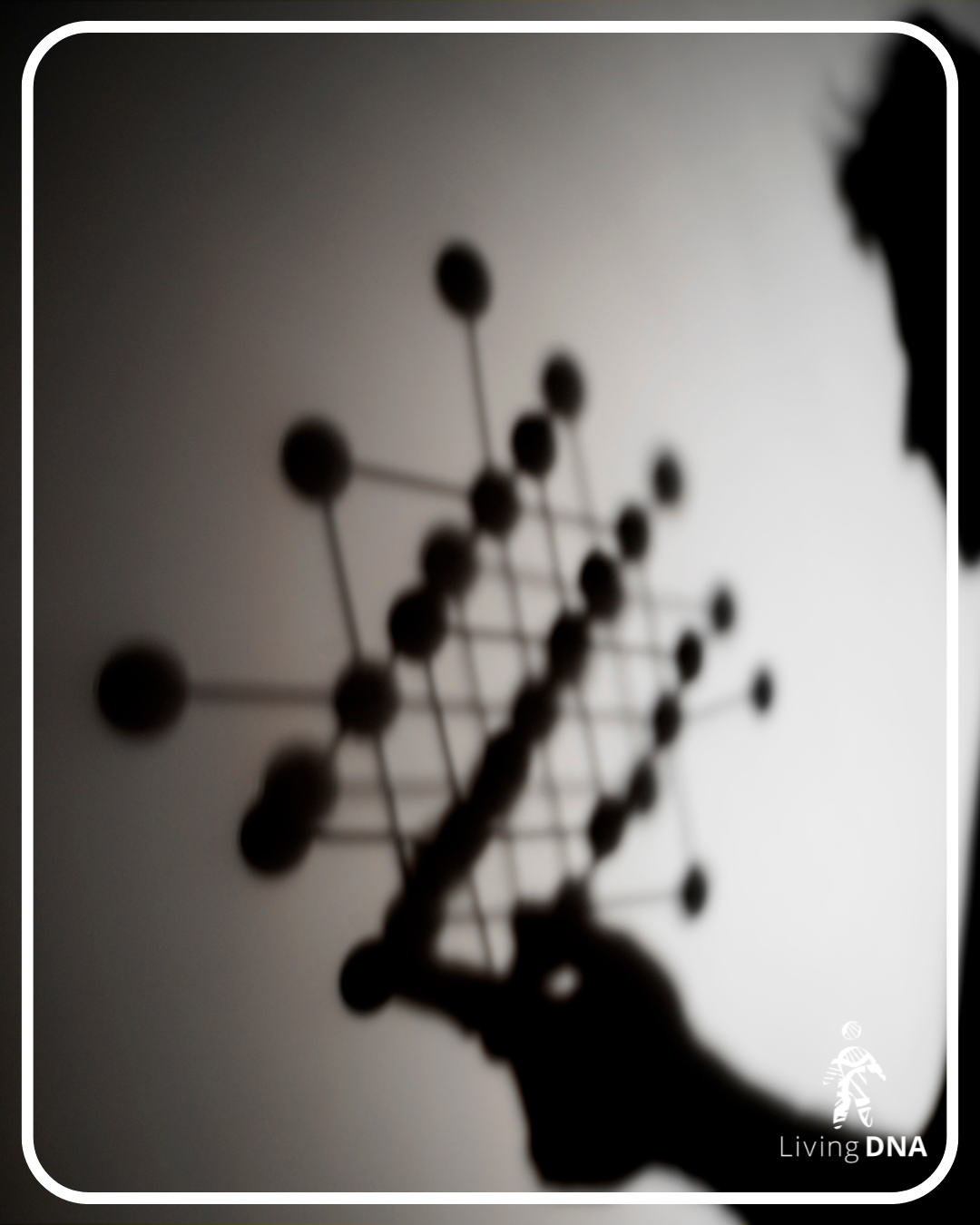
These different methods would ultimately meet in the middle.
Franklin’s Data
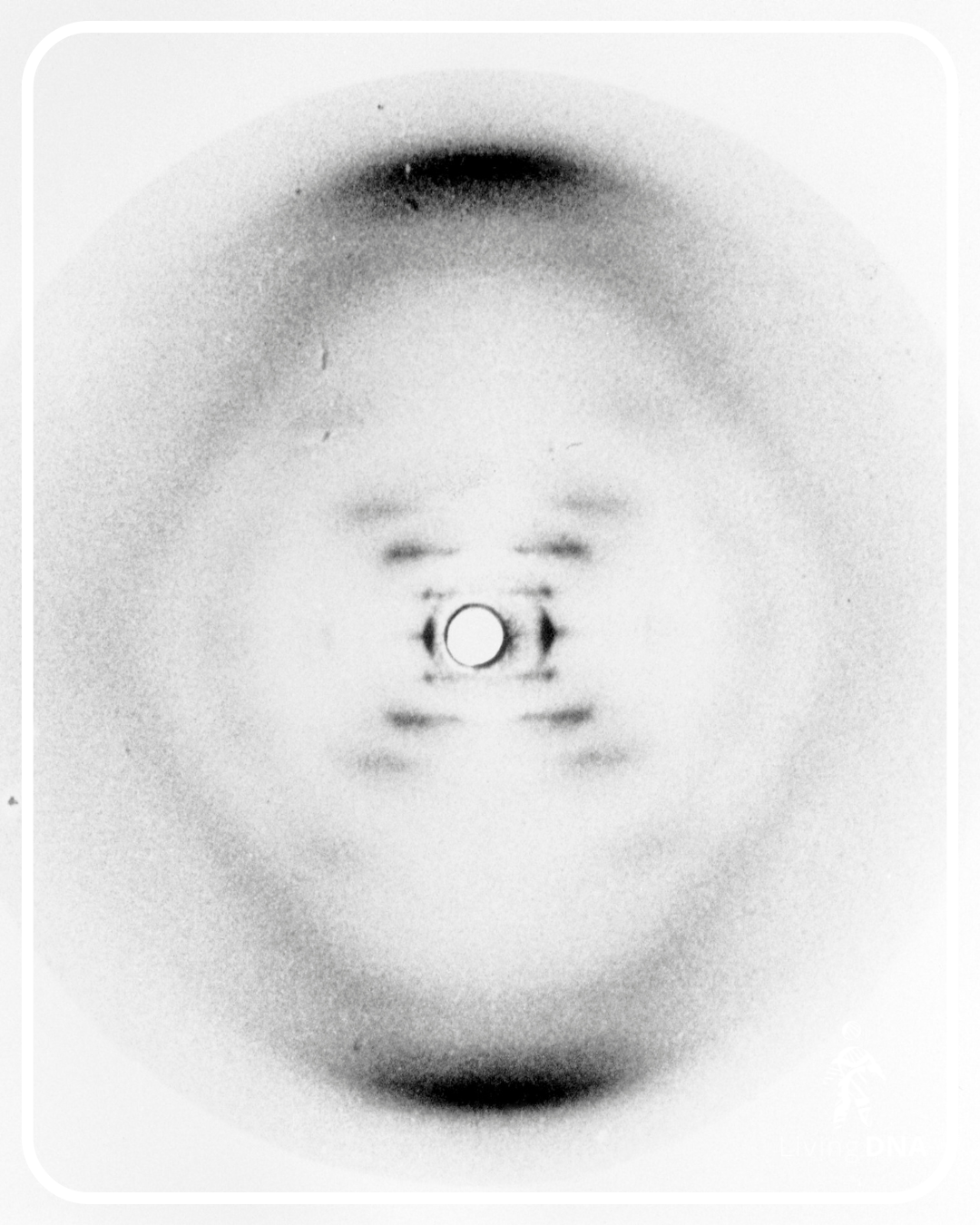
Rosalind Franklin’s contribution to the discovery of DNA’s structure was grounded in rigorous experimental work. She refined existing X-ray crystallography techniques to produce exceptionally clear diffraction images of DNA fibers. Among these, one image became particularly significant: Photo 51.
Photo 51 displayed a distinctive X-shaped pattern, a hallmark of a helical structure. But its importance extended beyond simply suggesting a helix. From the image and accompanying data, Franklin was able to deduce critical details: the diameter of the helix, the spacing between repeating units, and the likely arrangement of the molecule’s component parts. She also identified that the phosphate backbone lay on the outside of the structure - an essential constraint for any accurate model.
Franklin was cautious in her interpretations, preferring to rely on fully validated conclusions rather than speculative leaps. This restraint reflected both her scientific rigor and the complexity of the data she was analyzing.
Building the Double Helix
Meanwhile, Watson and Crick were assembling a model that could account for all of the known evidence. A key piece of the puzzle came from Erwin Chargaff, who had demonstrated that in DNA, the amount of adenine equals thymine, and the amount of guanine equals cytosine. These relationships (now known as Chargaff’s rules) hinted at a pairing mechanism within the molecule.
By combining Chargaff’s findings with structural constraints derived from Franklin’s data, Watson and Crick proposed a model in 1953: DNA consists of two strands forming a double helix, with complementary base pairs connecting them. The strands run in opposite directions (antiparallel), and the specific pairing of bases provides a straightforward mechanism for replication where each strand can serve as a template for a new partner.
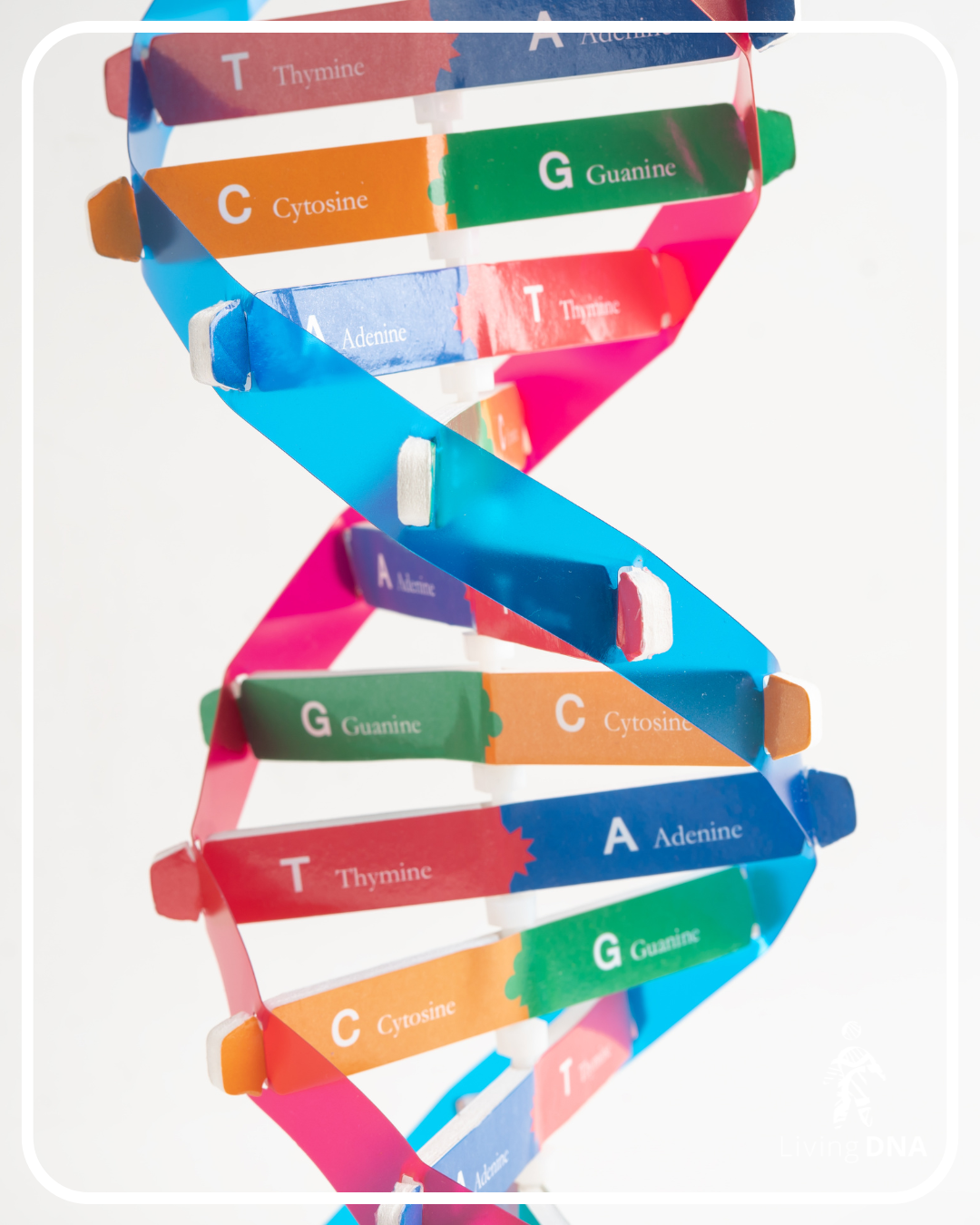
This model explained how genetic information could be copied accurately, addressing the central question that had driven the research.
Their findings were published in the journal Nature in the paper Molecular Structure of Nucleic Acids, a concise article that would become one of the most influential scientific publications of the twentieth century.
Questions of Credit and Recognition
The discovery of the double helix was not a single moment of insight but the result of overlapping contributions. However, the way credit was assigned has remained a subject of historical scrutiny.
Watson and Crick’s model relied in part on data generated at King’s College London, including Franklin’s work. Some of this information was shared without her direct knowledge, raising questions about scientific communication practices at the time. Additionally, the institutional environment and gender dynamics of the 1950s shaped how contributions were recognized and valued.

In 1962, the Nobel Prize in Physiology or Medicine was awarded to Watson, Crick, and Wilkins for the discovery of DNA’s structure. Franklin had died in 1958 and was therefore not eligible for the prize, which is not awarded posthumously. Nonetheless, her role has since been more fully acknowledged by historians of science as essential to the discovery.
A Structure That Changed Biology
The identification of the double helix did more than solve a structural puzzle. It transformed biology. By revealing how DNA could replicate, it provided a molecular basis for heredity and opened the door to modern genetics, genomics, and biotechnology.
Today, the double helix is both a scientific model and a cultural symbol. Its form is instantly recognizable, representing not just DNA but the broader idea of life encoded in molecules.
Recognizing the roles of Rosalind Franklin, James Watson, Francis Crick, and their colleagues provides a more complete understanding of how scientific breakthroughs occur not as isolated flashes of genius, but as collective efforts shaped by data, interpretation, and context.