Royal Haplogroups
31st October 2026
Do you share your haplogroup with a royal family?
In October, Living DNA celebrates Family History month, and this year we’re looking at the royal connection.
Have you ever wondered what you might have in common with ancient Pharaohs or European kings? Your DNA could hold some clues.
Ancient Egyptian Dynasties
Ancient Egyptian royalty believed that they were living gods, and as Ancient Egyptian creation myths and religious traditions contain several married sibling pairs (such as Osiris and Isis who ruled together as a husband and wife), marrying within their own family linked them more closely with the gods they worshipped.
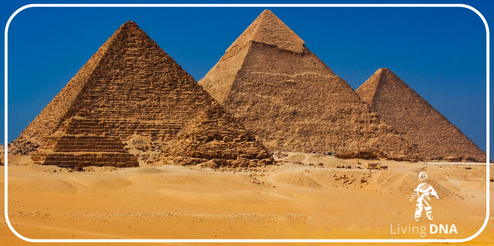
It also had the effect of maintaining that “divine” bloodline, separating them from the mortal populace they ruled.
This intermarriage - called endogamy - has been closely studied by archaeology and geneticists. The lack of outside genetic influence has made it far simpler for modern researchers to track genetic markers through several centuries of the period called the New Kingdom. The Eighteenth and Twentieth dynasties, the height of pharaonic power, have become the most closely studied lineages in the history of archaeology.
The Eighteenth Dynasty
Tutankhamun is probably the most famous member of the eighteenth dynasty. His tomb was rediscovered in 1922, and it was in remarkable condition given that more than 3,000 years had passed since his death at just 19 years old in 1323 BCE.
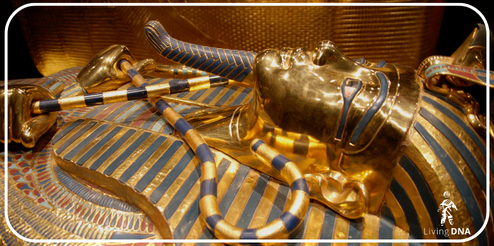
His motherline haplogroup was KV35YL, and he shares it with two mummies which were found together, who are thought to be his mother and grandmother. It is believed that they had been taken from their original resting places by tomb robbers, so identification has proven difficult.
The mummy identified using DNA as Tutankhamun’s mother is known simply as “The Younger Lady,” and her identity remains the subject of debate. What we do know is that her mother was most likely Queen Tiye (although due to inbreeding increasing how much DNA is shared between individuals of different generations, it’s debated whether Tiye was the Younger Lady’s mother or, in fact, her grandmother). Tiye was originally known as the Older Lady, and was found alongside the Younger Lady. She had several confirmed daughters, but there is uncertainty as to which one the Younger Lady may be.
Tutankhamun’s maternal great-grandparents are both known to have also belonged to haplogroup K. Yuya, his great-grandfather, a non-royal courtier, and his wife Thuya were both exceptionally well preserved when their tomb was re-discovered in 1905, allowing genetic testing to take place.
The Twentieth Dynasty
Almost 140 years after Tutankhamun’s death, Ramesses III ascended to the throne. The second pharaoh of the twentieth dynasty, Ramesses III would reign for 31 years before being brutally assassinated by one of his wives and their son in what is now known as the Harem Plot.
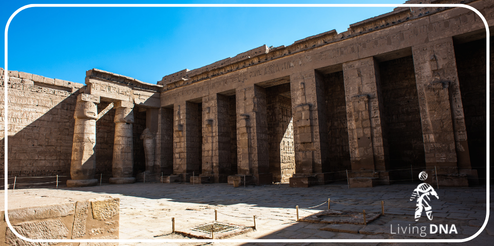
Forensic DNA analysis conducted in 2012 determined that Ramesses III belonged to Y-DNA haplogroup E1b1a (also known as E-M2). This haplogroup is the predominant paternal lineage among Bantu-speaking populations and is widespread across Sub-Saharan Africa.
The identification of this marker in Ramesses III and the mummy believed to be his son, Prince Pentaweret who was implicated in Ramesses III’s assassination, provides critical evidence for the indigenous North African and Sub-Saharan roots of the Ramesside kings.
European Aristocracies
The desire to keep the power of the crown within the same family hasn’t been exclusive to the Ancient Egyptian dynasties; certain European royal and aristocratic lineages are famed for endogamous pairings as well, but DNA analysis has shown that the royal families of Europe had their fair share of extra-marital dalliances.
The House of Bourbon
The House of Bourbon is a branch of the Capetian dynasty which, at times, has ruled France, Spain, and parts of Italy.
King Louis XVI ruled France from 10 May 1774 to 21 September 1792, and was married to Marie Antoinette. Both were famously executed by guillotine in 1793 following the French Revolution, and onlookers reportedly dipped their handkerchiefs in his blood as it fell to the ground.
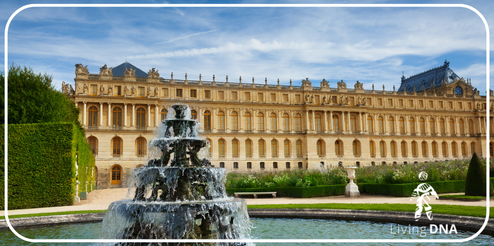
One of these handkerchiefs was reportedly stored inside a squash gourd that was carved to commemorate fallen heroes of the Revolution, and this story was given credence in 2012 when genetic material from inside the gourd was analysed and compared to a sample taken from a mummified head reported to be of Louis XVI’s ancestor, Henri IV. Both samples suggested a Y-DNA haplogroup of G2a.
The haplogroup G2a is rare in Northern Europe, so finding two unrelated individuals carrying it would be unusual, but the result was called into question when three living members of the Bourbon family who came from unbroken male lines - meaning that they should have shared the same Y-DNA haplogroup ad Louis XVI and Henri IV - were found to carry an unrelated haplogroup, a branch of the more common R1b.
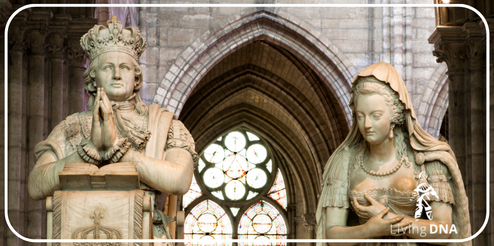
This result suggests two scenarios: Either the blood in the gourd and the mummified head do not belong to the royals they have been attributed to, or at some point in the 30 generations since the founding member of the family there has been a Non Paternity Event (NPE), meaning that a recorded father was not the biological parent.
Plantagenets and Car Parks
The French royal family is not the only one to have had DNA testing place a question mark over paternity somewhere in their lineage.
When Richard III, the last Plantagenet King of England was exhumed from underneath a car park in Leicester, he was identified as belonging to mitochondrial haplogroup J1c2c and Y-DNA haplogroup G-P287. The mitochondrial result matched two living descendants following the maternal line, which provided high confidence in the identity of the remains.
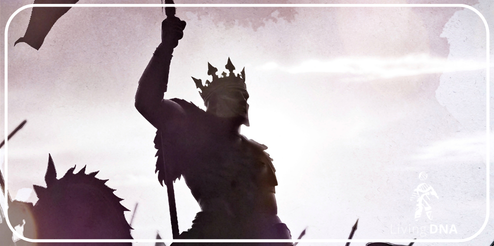
But his Y-DNA result did not match modern individuals who claimed paternal descent from the House of Beaufort, another branch of the Plantagenets, suggesting at least one instance of false paternity within the royal line.
Are there secrets hidden in your own DNA?
Do you share haplogroup with the Ancient Egyptian Pharaohs? Or the monarchs of Europe? Maybe you’ve unearthed a family secret using DNA results.
Let us know on social media, or by emailing help@livingdna.com.